
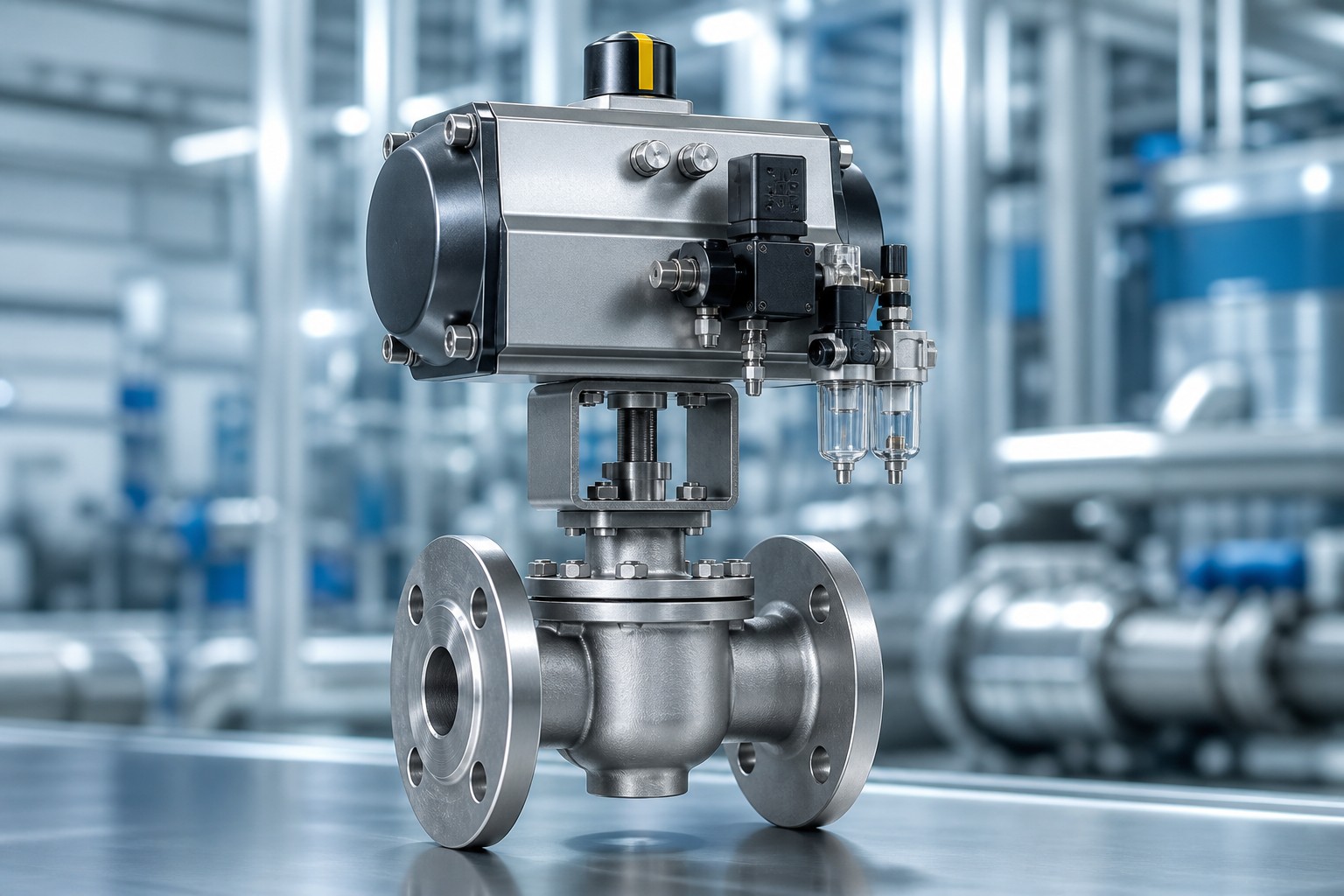
Pneumatic control valves are widely used in petrochemical, chemical, heating, and utility plants because of their fast response and mature design. Sticking, internal leakage, poor positioning, and sluggish travel are common complaints. Without a clear troubleshooting path, teams may dismantle equipment repeatedly without finding the root cause. Xi'an Meitian Electromechanical Equipment Co., Ltd. supplies pneumatic control valves, positioners, and actuator accessories. The following methods help technicians locate problems quickly and maintain valves effectively.
1. Verify air supply and control signal first
Start every investigation with air quality and the control signal. Confirm supply pressure meets the actuator rating, check filter-regulators for blockage or poor draining, and look for tubing leaks. Moisture and oil in instrument air accelerate diaphragm aging and clog positioners. Use a calibrator to confirm that the 4-20 mA signal is stable, terminals are tight, and shielding is sound. Many “dead valves” are simply open circuits or insufficient air.
2. Slow travel or incomplete stroke
If the stem moves slowly, possible causes include undersized or overly long air tubing, clogged positioner orifices, leaking diaphragms, fatigued springs, or mechanical sticking. Switch to manual and try the handwheel to separate pneumatic issues from mechanical binding. Binding often comes from overtight packing, crystallization, coking, or debris. Depressurize safely before cleaning; never force the stem and bend it.
3. Poor positioning and hunting
Large deviation from setpoint, or oscillation around one opening, often means the positioner is not tuned, the feedback arm is loose, the cam is wrong, friction is high, or the valve is oversized and loop gain is excessive. Typical steps are: tighten feedback hardware, check positioner air, retune automatically or manually, and adjust sensitivity and dead band. If the process itself is unstable, coordinate with process and control engineers; do not tune the valve alone.
4. Internal and external leakage
Internal leakage after closing may result from worn plug and seat, damaged seating surfaces, incomplete closure, or insufficient actuator force. External leakage usually appears at packing, flange gaskets, or diaphragm housing joints. Perform leak checks according to the required class and replace worn trim when needed. Packing leaks can be adjusted or repacked carefully so the stem remains free enough to avoid sticking.
5. Routine care
Inspect air purification and drain regularly, verify regulator settings, tighten fasteners, clean and lubricate the stem where permitted, check positioner feedback hardware, and record alarms and estimated stroke cycles. During turnarounds, focus on diaphragms, springs, O-rings, seating surfaces, and positioner filters. Keep critical spares in stock to shorten recovery time.
A structured path covering air, signal, positioner, actuator, and trim—backed by routine care—raises valve availability. Meitian can provide packaged pneumatic control valves, feedback accessories, and field technical support to strengthen control-loop reliability.